Claude William McClung, (1882-1965), is said to be the man who pioneered the tourist industry at Nambucca Heads. He was born at Bungendore, near Goulburn, the son of Alexander McClung and Grace Margaret McClung nee Hunt. They had a family of four sons and five daughters of which Claude was the seventh.
Claude left home for Nambucca Heads in 1901 and worked on the construction of the breakwall. He also worked as a fireman on the tugboat Kiola. After marrying Ruby Mary Wilson in Sydney in 1905, the McClungs moved to Hillgrove, near Armidale. Then, with son Noel in tow, they returned to live at Nambucca Heads in 1914.
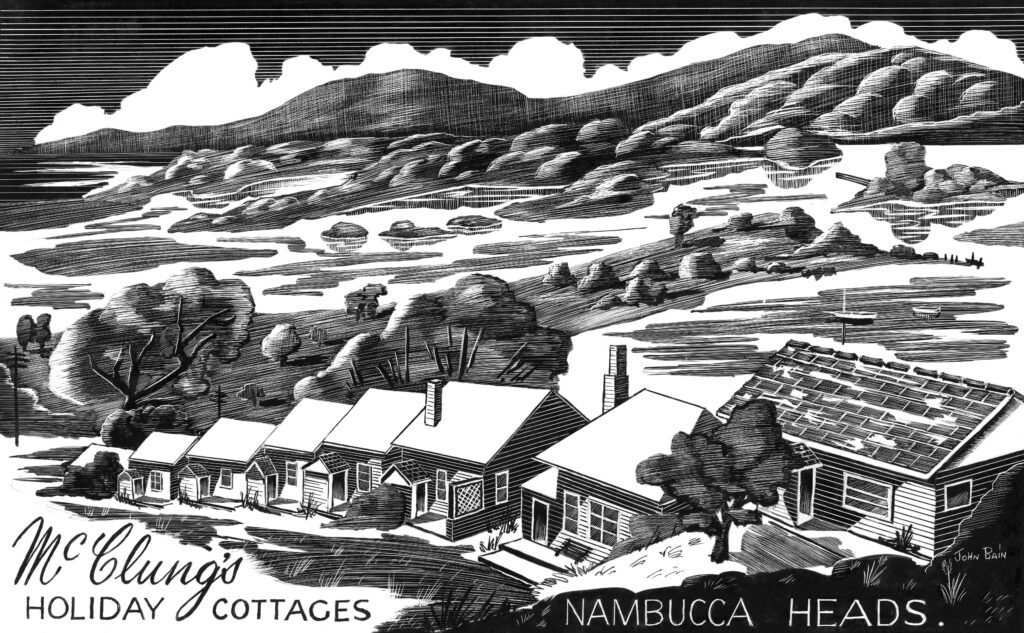
Claude built his first holiday cottage in 1926 on Bay Street, followed, almost annually, by another, until about 1934. The cottage business was complemented by boat hire at Gordon Park, all run from the McClung’s home opposite the cottages. Their launch, “Happy Days”, was used to take people to Warrell Creek, Macksville and the Bowraville butter factory.
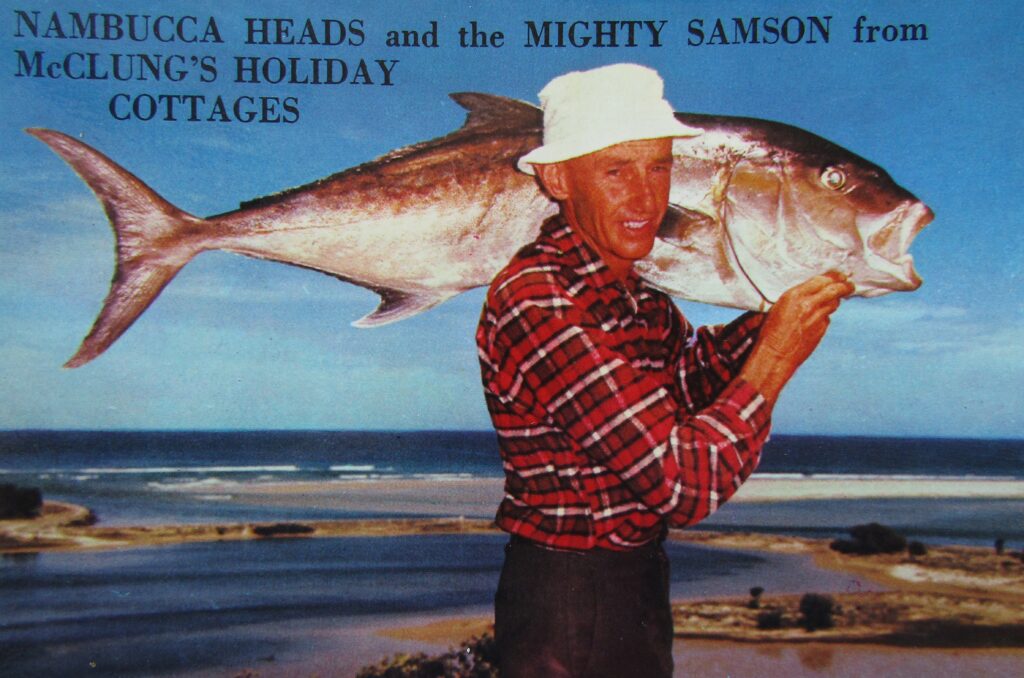
Claude and Grace’s son Noel was married to Melva Welsh in 1942. He served in the army for four years during the Second World War, returned to work as a teacher at local schools and then took over the holiday cottage and boat hire business from his father. He was a champion fisherman and held the Australian record for the largest samson fished. In 1977, two years after his death, the Noel McClung Memorial Library was named in his honour at Nambucca Heads.
The McClung business brought many holidaymakers from Australia and overseas to Nambucca Heads, who often returned annually and some even returned to live.
When Claude McClung started his cottages the saw mills of Nambucca had ceased. In fact, it was said, “That’s the end of Nambucca. The town will die.” It is testament to the vision and hard work of the McClungs that Nambucca Heads not only survived but prospered as a popular holiday destination.
Claude and Ruby McClung are buried at the Nambucca Cemetery.