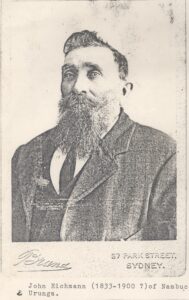
John Eichmann and the SS Alpha

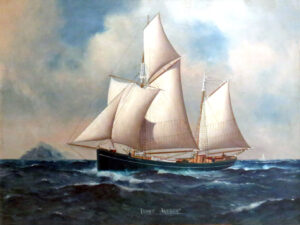
SS Alpha by William Edgar
John Eichmann 1833-1911

The Alpha was an 82 tonne wooden schooner owned by Nambucca Heads pioneer John Eichmann. The vessel had a length of 26.9 metres and a beam of 6.3 metres.  There is local evidence that it was built at the Davis shipyard in Nambucca Heads. The NSW Office of Environment and Heritage has it listed as built by Bret Donaldson at Port Stephens in 1867.  It was registered in Sydney in 1867. The Alpha was wrecked on the rocks at Nambucca Heads on 21.02.1897.

John Eichmann lived in Balmain in Sydney before travelling to the Nambucca. He may      have well met fellow pioneers the Gordons, the Buckmans, the Davis’s and the Christensens there. He had a mill called the Enterprise in 1882 which joined the growing number of mills at Nambucca Heads. He also had a mill at Urunga. Prior to this he had been involved in coastal trade for some years, likely commencing in the 1850s. His mill was said to use the latest technology and he had as many as thirteen bullock teams hauling in logs. Milling and shipping are notoriously risky businesses but, of all of the businesses on the Nambucca, Eichmann seems to have poured in the most capital and endured the longest. The Eichmann descendants made Nambucca Heads their home and three of the family’s early residences are built adjacent to each other on Kent Street, Nambucca Heads.

The painting, on display at the Headland Museum, represents an important record of the coastal shipping trade and the growth of the timber industry and ship building industry of Nambucca Heads. There are no known photographs of the Alpha and this is likely the only portrait of the Alpha. Its ownership by a noted pioneer, the assertion that it was built on the shores of Nambucca Heads and its eventual wrecking there, make the Alpha a significant part of Nambucca Heads history. In addition, the artist William Edgar has his place in the history of the Australian shipping trade by his portraiture. The painting would be of interest to Australian and international maritime museums.
McCLung Cottages

Claude William McClung, (1882-1965), is said to be the man who pioneered the tourist industry at Nambucca Heads. He was born at Bungendore, near Goulburn, the son of Alexander McClung and Grace Margaret McClung nee Hunt. They had a family of four sons and five daughters of which Claude was the seventh.

Claude left home for Nambucca Heads in 1901 and worked on the construction of the breakwall. He also worked as a fireman on the tugboat Kiola. After marrying Ruby Mary Wilson in Sydney in 1905, the McClungs moved to Hillgrove, near Armidale. Then, with son Noel in tow, they returned to live at Nambucca Heads in 1914.

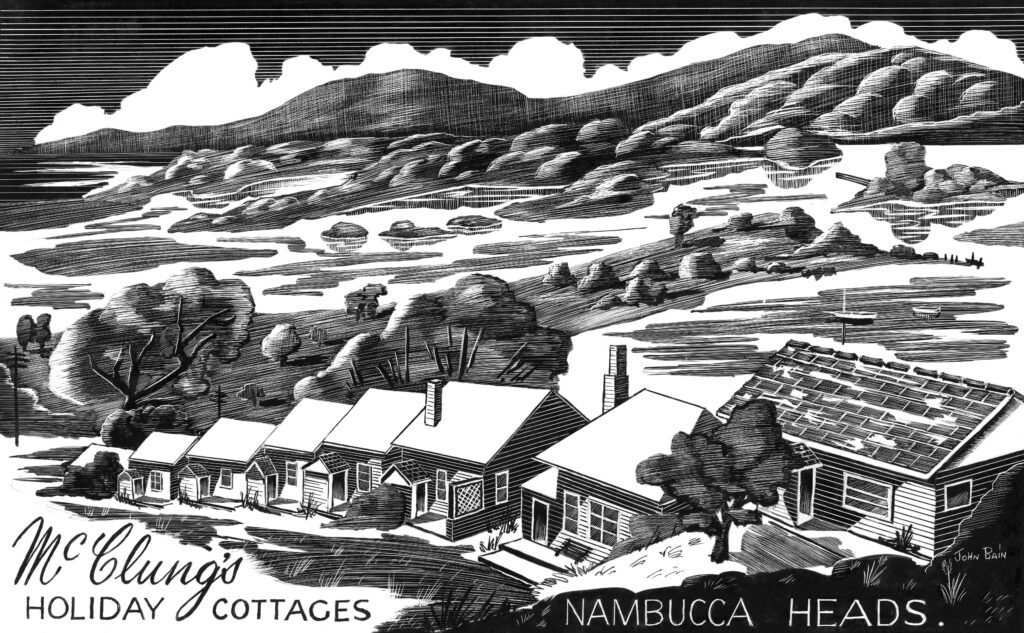
Claude built his first holiday cottage in 1926 on Bay Street, followed, almost annually, by another, until about 1934. The cottage business was complemented by boat hire at Gordon Park, all run from the McClung’s home opposite the cottages. Their launch, “Happy Days”, was used to take people to Warrell Creek, Macksville and the Bowraville butter factory.

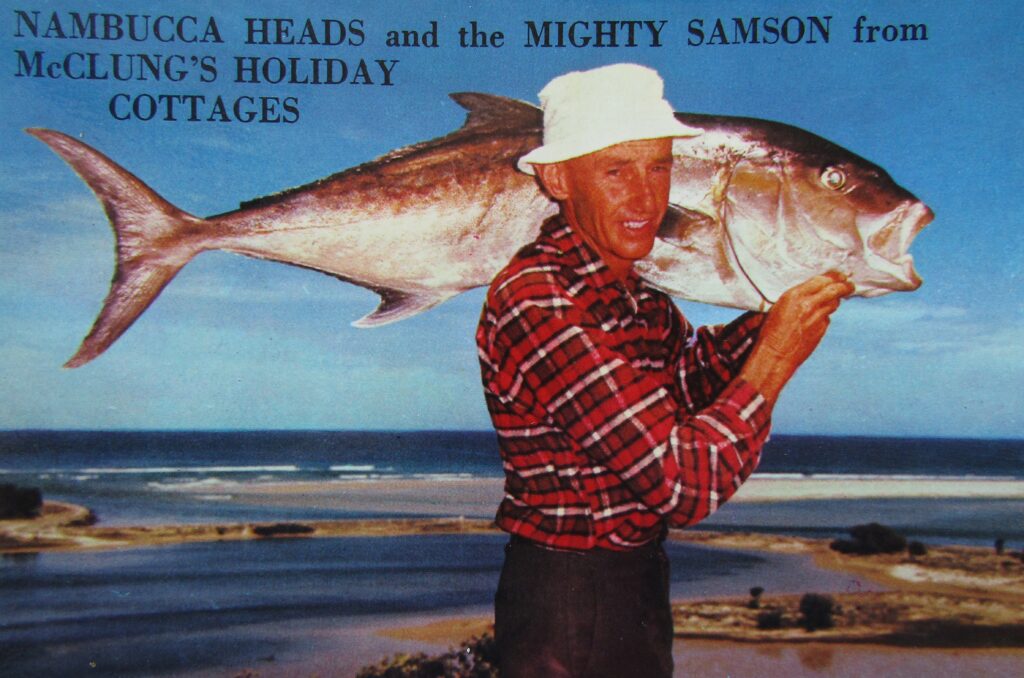
Claude and Grace’s son Noel was married to Melva Welsh in 1942. He served in the army for four years during the Second World War, returned to work as a teacher at local schools and then took over the holiday cottage and boat hire business from his father. He was a champion fisherman and held the Australian record for the largest samson fished.  In 1977, two years after his death, the Noel McClung Memorial Library was named in his honour at Nambucca Heads.

The McClung business brought many holidaymakers from Australia and overseas to Nambucca Heads, who often returned annually and some even returned to live.

When Claude McClung started his cottages the saw mills of Nambucca had ceased. In fact, it was said, “That’s the end of Nambucca. The town will die.” It is testament to the vision and hard work of the McClungs that Nambucca Heads not only survived but prospered as a popular holiday destination.

Claude and Ruby McClung are buried at the Nambucca Cemetery.

Noel McClung and the “Mighty Samson” catch.
McClung’s Holiday Cottages Brochure 1971


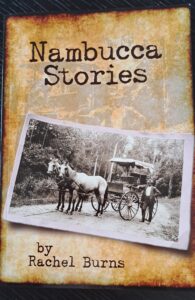
Nambucca Stories Book

Nambucca Stories, by museum volunteer Rachel Burns, is 68 stories of the Nambucca Valley since early European settlement.

The stories had their birth in radio segments, local newspapers and is now in a book version of 208 pages with historic photos.

This important record of the settlers and community tell of their lives battling against isolation and the environment to build a self-reliant and prosperous community.

Copies, at $25, are available from the Nambucca Headland Museum, Nambucca Bowling Club, Mary Boulton Museum at Macksville and Kempsey Museum. We can post the book anywhere, just message us or email:

info@nambuccaheadlandmuseum.com.au

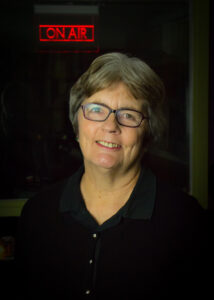
Author Rachel Burns. Photo credit Mick Birtles.

The White Albatross

white-albatross

The White Albatross (Pty Ltd) Holiday Centre is at the end of Wellington Drive on the northern side of the ‘V’ Wall.

In 1895, the break wall was commenced in an effort to control the Nambucca River at its entrance (The Bar) after a number of shipping disasters.

The Break Wall was completed in 1907 and went across the original river’s flow in an arc from Wellington Rock area to the Sugar Wharf, creating the existing Lagoon and an Inner Harbour.

The original land at the end of Wellington Drive, situated at the bottom of the Mountain Headland now known as Wellington Reserve/Park contained a quarried deep water hole called the Siberia Quarry Hole and the land extended north/east to the lagoon, now known as Wellington Park.

The general populace at the time consisted of a number of Italian fisherman’s huts, a large house which was the Harbour Pilot’s residence, a rocket shed located between the house and deep water hole’s edge, a number of outbuildings, and on the river’s edge, a sugar wharf, where unloading of the sugar from ships was distributed to the local community.

For more information about The White Albatross and ‘V’ Wall history, come and visit us!